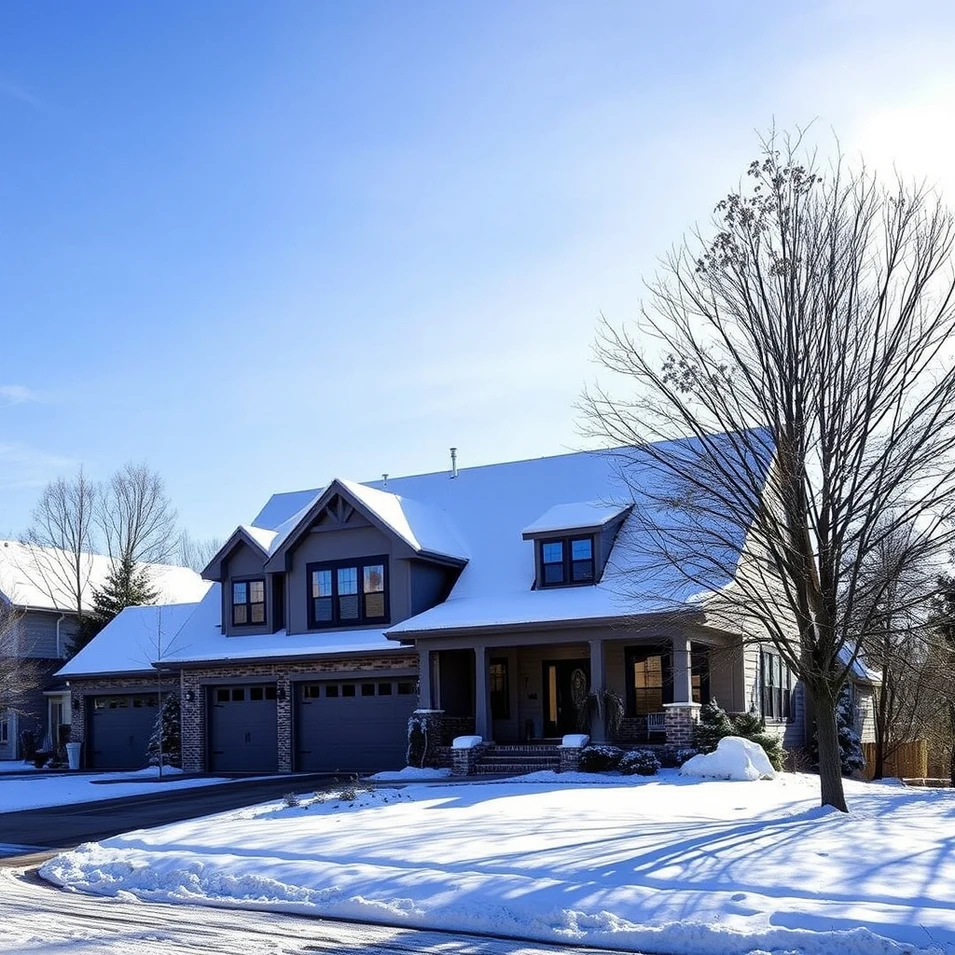
Drive through Muskegon or Grand Haven in January and the for-sale signs are wearing little caps of snow. Most people read that as a dead market and wait for the daffodils. I read it differently. The buyers who go shopping while everyone else is hibernating tend to walk away with terms they would never get in May, and they get to see the house with all of its winter laundry hanging out. Spring gets the credit for being homebuying season, but in West Michigan, the cold months quietly do some of the best work of the year for the people willing to show up. This is not a trick. It is just what happens to supply, demand, and human motivation when the temperature drops.
Fewer buyers means less competition, not less inventory worth seeing
The number that matters most to your wallet is not how many homes are listed. It is how many other buyers you are bidding against. In spring, the Lakeshore fills with shoppers and good homes can draw several offers in a weekend. That is a great market to sell into and a hard one to buy in. Winter thins the crowd. The casual browsers stay home, and the people still touring in a Michigan February are serious. Fewer competing offers usually means you negotiate one on one rather than racing strangers to the highest number.
The honest tradeoff is that fewer homes come on the market in the cold months, so you will have a smaller menu. But a smaller menu with one hungry buyer at the table often beats a huge menu where you are fighting six families for the same kitchen. The right home only needs to exist once, and patience in winter is often rewarded with leverage spring cannot manufacture.
Winter sellers usually have a reason to move
Think about who lists a house in December in Michigan. It is rarely someone testing the waters for a dream price. More often there is a life event behind it: a job relocation, a home they already closed on, an estate that needs to settle, a rental they are tired of carrying. People who can comfortably wait for the busy season usually do. The ones who list when the driveway needs plowing tend to have a clock running.
A motivated seller is not a desperate seller, and you should never treat them like one. But motivation does tend to translate into flexibility, whether that is a more reasonable response to your offer, a willingness to make repairs rather than risk the deal falling through, or a closing date that works around your life. You are far more likely to find genuine give-and-take in January than in a spring bidding war.
A Michigan winter shows you what a home is really made of
Cold weather is an honest inspector. A house photographed in July with the windows open and the lawn green hides a lot. The same house in February tells the truth. You can feel whether the windows leak when you stand next to them, hear whether the furnace is keeping up or working overtime, and see whether the basement stays dry during a thaw.
Watch the roof and gutters too. Ice dams, those ridges of ice along the eaves, often point to insulation or ventilation issues in the attic, and they are far easier to spot when there is snow on the house. A flashlight in the attic and basement during a winter showing teaches you more than any summer walkthrough, and a good REALTOR(R) will point out what they notice. None of this replaces a licensed home inspection, and you should always have one. But buying in winter means you walk into that inspection already knowing what to ask.
The transaction itself tends to move faster
There is a behind-the-scenes benefit too. The machine that processes a purchase moves quicker when it is not jammed. In spring and summer, lenders, appraisers, title companies, and inspectors all run at capacity and timelines stretch. In the winter lull they often have more breathing room, which can mean appraisals scheduled sooner and underwriting that does not sit in a queue. Your timeline still depends on your lender, so let them set expectations.
About the idea of buying before the spring bump
You will hear it said that buying in winter lets you get in before spring prices rise. Handle that idea carefully. Real estate in West Michigan does tend to follow a seasonal rhythm, with more competition arriving as the weather warms, so a quieter market often puts you in a stronger negotiating position than you would hold a few months later. What I will not do is promise a specific percentage of appreciation, because no honest agent can. Markets move on interest rates, local job news, and how much inventory shows up, and those forces do not read the calendar. A buyer competing against fewer people usually negotiates a better deal than one fighting a crowd. That advantage is real and repeatable in a way price forecasts are not.
The honest downsides of buying in the cold
I would not be doing my job if I only sold you the upside. Winter buying has real friction. The selection is smaller, so if you need a very specific home in a very specific neighborhood, you may have to wait. Snowy roads and short daylight cut your touring window, and you cannot evaluate the landscaping or how the yard drains when everything is frozen and white. For some buyers those tradeoffs are worth the leverage and the clarity. For others, the easier showings and bigger selection of spring are the better fit. There is no universally right answer, only the one that fits your life and your timeline.
Get your money lined up before you start
Whatever season you choose, the buyers who win are the ones ready to act. In a thin winter market, a seller weighing your offer against the quiet wants to know you can actually close, and that means a real preapproval, not a quick online estimate. Your lender, not your agent, is the one who quotes you rates, runs the numbers on what you can borrow, and tells you what your payment and cash to close will look like. Get that done early so that when the right winter listing appears, you can move on it the same day.
Winter buying is not for everyone, and I will tell you straight if I think spring is the smarter play for you. But if you are serious, organized, and willing to brave a little snow, the off-season in West Michigan can hand you room to negotiate that the busy season almost never does. If you want to look at what is available across Muskegon County and the Lakeshore right now, I am happy to walk it with you.