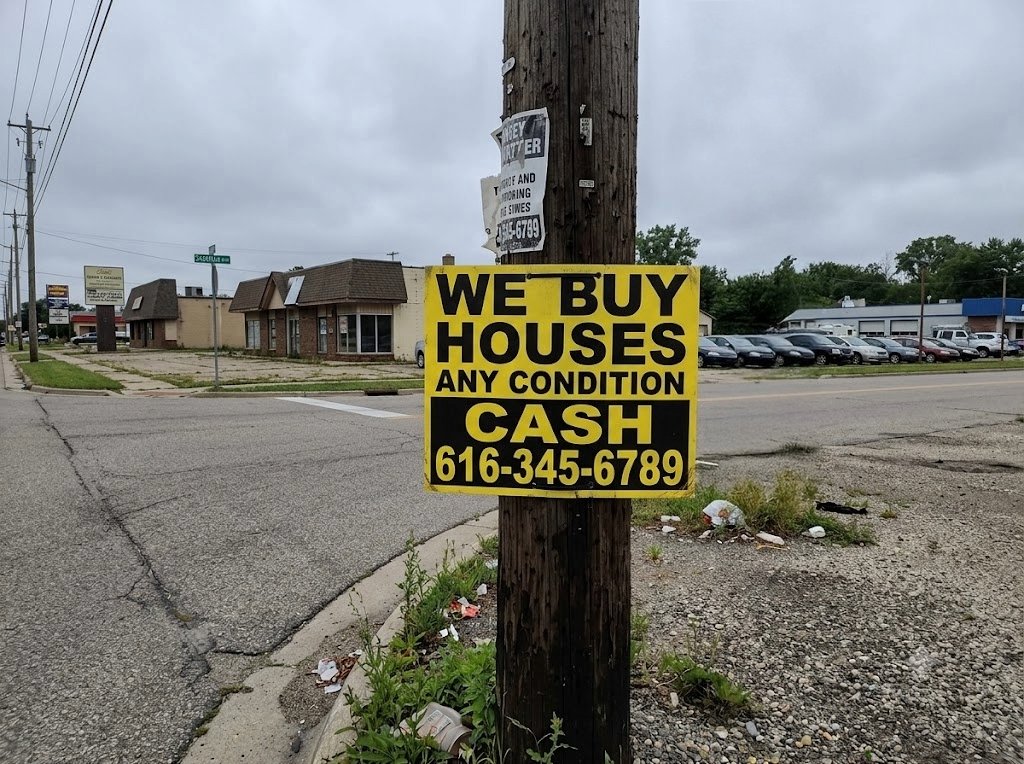
You have seen the signs. Stapled to telephone poles, planted at the off-ramp, riding the side of a bus. We buy houses for cash. Any condition. Close in seven days. No commissions, no closing costs, no repairs. It sounds clean, and for a seller who is tired or in a tight spot, it can sound like a rescue. I want to walk through what that offer is actually selling, because the convenience is real, but so is the price tag, and the price tag is the part nobody puts on the billboard. In West Michigan I have watched sellers leave thirty, forty, even fifty thousand dollars on the table to save a few weeks, and most of them never knew the gap was there.
The pitch is convenience, priced as a discount
The cash-buyer model runs on one honest promise and one quiet trade. The honest promise is speed and certainty. They close fast, they buy as-is, and you never touch a repair. The quiet trade is that you accept a number well below what the open market would pay, and you call the difference the cost of convenience. There is nothing illegal about that, and for a few sellers the speed genuinely is worth it. The problem is that almost no one is shown the other number first, so they agree to a discount they were never given the chance to measure.
The number that disappears
Every house has a market value, the price a real pool of buyers would actually pay for it today. A cash investor's offer is not that number. It is that number minus their margin, minus their risk, minus the profit they plan to make when they resell or assign it. My job, before you sign anything, is to tell you what the real number is. I do that with a comparative market analysis, a CMA, which looks at what similar homes near you have actually sold for and adjusts for condition, location, and the things that make your house yours. A CMA is not a formal appraisal, the lender orders that later, but it leans on the same comparable-sales logic an appraiser uses. When I represent you, I work for you and no one else. I cannot and will not carry water for a buyer who is lowballing you. So that real number is not a ceiling someone hands you, it is the floor we negotiate up from, and you should know exactly what your home is worth before you decide what to do with it.
Cash does not have to mean cheap
Here is the part the signs really would rather you not know. Cash buyers are not rare, and they are not all lowball investors. When we market a home the right way, we reach the whole pool, including serious cash buyers who will compete for it. One investor making you a single take-it-or-leave-it offer is the weakest position a seller can be in. Several buyers competing, some of them paying cash, is the strongest. I would rather put your house in front of all of them and let the market set the number than let one buyer set it for you across your kitchen table.
The terms you did not know you could ask for
Price is only half of a good sale. The other half is terms, and terms are where a marketed sale quietly beats a one-and-done cash offer. Maybe you need to close quickly but stay in the home for a while. Maybe you want to sell now and keep living there under the right arrangement. Maybe you just need sixty days of rent-back while your next place comes together. When we bring several buyers to the table, we can shop those terms, not only the price. A lone investor rarely bends, because their model depends on you accepting their structure. A competitive sale lets you ask for yours.
What often happens after you sign
There is one more thing worth understanding about a lot of these quick-cash deals, and it is the wholesale move. In plenty of cases the buyer never plans to keep your house at all. They lock you in at one price, then turn around and assign that contract to another investor for a markup, sometimes thirty or fifty thousand dollars over what they are paying you. That spread was your equity. It did not disappear, it just moved to someone who stood between you and the real buyer for a couple of weeks. Sell on the open market and that middle spot does not exist, so the difference stays where it belongs, with you.
If you want a direct sale, you still do not need the wholesaler
Maybe a traditional listing is not what you want. Maybe you already have a buyer in mind, or you want specific terms baked into the deal that a normal sale does not usually carry, like staying in the home for a stretch after closing. That is a real and reasonable choice, and it is exactly the situation the cash-sign companies are built to capture. Here is the part they would rather you not hear. You can do that direct deal without them, and without handing away the spread. When you and a buyer want to work out the details yourselves, I can step in as your transaction coordinator. In that role I am the referee on the field, not an advocate for either side, just the person making sure both of you understand what the home is really worth, the paperwork and disclosures are handled right, and the process runs cleanly from offer to closing. That is the honest version of what a wholesaler only pretends to do, except the markup that would have gone to a middleman stays in your pocket.
So you really have two honest paths. If you want someone in your corner fighting for the highest price the market will pay, I represent you, and I am on your side only. If you would rather arrange your own deal and just want it handled correctly, I can coordinate it as a neutral service. Either way, no one stands between you and your equity, taking a cut for the privilege.
Why having a REALTOR(R) in the room changes the math
A REALTOR(R) is held to a code of ethics, and that is not a slogan. I cannot tell you a house is worth one thing when I know it is worth another, and I am working for you, with a duty to your interests, not flipping your home for my own spread. That one fact reorders the entire transaction. A cash investor's incentive is to buy low. My incentive is to get you the most the market will pay and to make sure you understand every number and every term before you commit to any of it.
The bottom line
A fast cash sale is a legitimate option, and once in a while it is the right one. But it should be a decision you make with the real number in front of you, not a discount you accept because the alternative was never explained. Before you call the number on the sign, let someone show you what your house is actually worth and what your options really are. If you still want the speed after that, at least you will know exactly what it cost. If you are even thinking about selling anywhere in West Michigan, I am glad to run the numbers with you first, no pressure and no obligation. Worst case, you learn your house was worth more than the sign was ever going to pay, and that is a good thing to find out.